

Charlie Walker put it on LinkedIn this week, which makes it official.
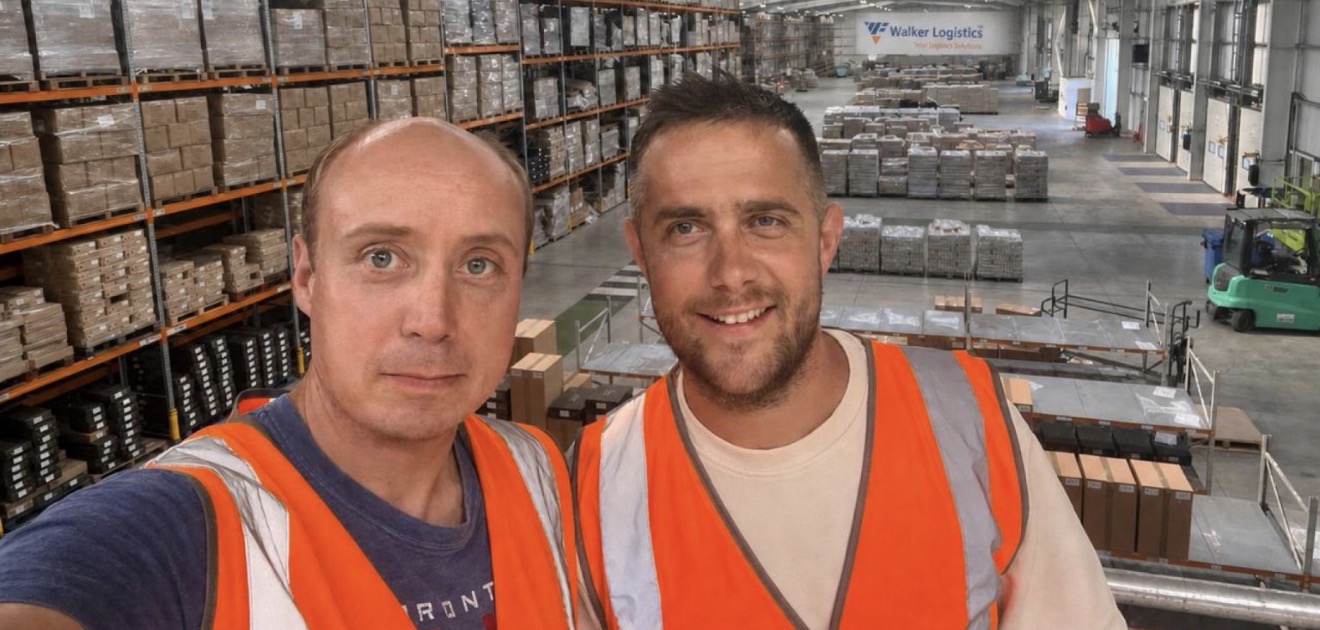
I’m delighted to announce that Walker Logistics is joining forces with Trent Peek. This industry-leading partnership brings together Walker Logistics’ first-class omnichannel fulfilment offering and Trent’s cutting-edge tech and AI expertise. Charlie Walker, Director of Sales, Walker Logistics
Charlie’s being generous, and LinkedIn is LinkedIn. What I’d add is that none of this arrived in an inbox. Charlie and I have known each other a while, and it started somewhere neither of us expected it to go.
A room in Northampton
A few years ago I was co-running We Are Fulfilment, a 3PL in Nottingham with 65,000 sq ft and a lot of opinions about how the industry treated smaller sellers. At some point it struck me that everyone in the sector was pitching against everyone else and nobody was comparing notes. So I booked a room in Northampton and invited the competition.
Some of the biggest names in UK fulfilment turned up, which surprised me. Walker turned up. No pitches, no pricing, nobody pretending they had it worked out — just operators talking about where the work was going and what was going to be hard about it.
That room is the only reason this partnership exists. I’ve run a warehouse. I’ve had the Friday afternoon where the carrier doesn’t show, and the call with a customer whose stock is in the building but not on the van. Whatever I say to Walker about their operation, I have to be able to say it to people who’ll know immediately if I’m guessing.
Membury
Walker runs more than 250,000 sq ft of ambient warehousing at Membury, and since 2025 their own warehouse in the Netherlands rather than somebody else’s. Charlie and his brother William took control of the company between them that same year.
Then the Dakota: 135,000 sq ft alongside the existing hub, BREEAM Excellent, running net zero on heat pumps and solar rather than an offset bought in December. It’s named after the aircraft that used to fly off the strip, and there are plans to stand a restored one on the site. That last part tells you more than the square footage does. You don’t restore an aeroplane for a business you’re planning to sell in three years.
They’re B Corp certified too, which isn’t a logo you buy. It’s an assessment of how a company treats its staff, its suppliers and the place it operates in, marked by someone else and re-checked on a cycle. Plenty of businesses will tell you they work that way. Fewer volunteer to be scored on it.
Why this one
Most writing about AI in logistics is about businesses that don’t exist yet. Walker’s the opposite, and it’s a far better problem: a real operation, running real volume, where a mistake is a pallet in the wrong place and everybody knows by Tuesday.
A lot of AI work dies in the demo, and the business never finds out whether it would have made any difference. You don’t get that luxury here. The aircraft left Membury a long time ago. What the site has run on ever since is pallets, and a pallet either arrives or it doesn’t.
Governed AI needs three things that are hard to fake: processes written down, evidence a system did what it said it did, and a named person accountable when it didn’t. Walker already works that way, and not for our benefit — their customers and their auditors have been asking for years. The discipline’s there. What isn’t there yet is any of it pointed at AI. That’s the part we’re for.
There’s a fourth thing, and it usually decides whether any of this lands: somebody senior has to want it. Charlie does. The first conversation wasn’t about whether the work was worth doing, which is rarer than it sounds.
What happens next
The work starts where it always starts: find the handful of processes where this genuinely pays, and be just as straight about the ones where it wouldn’t. Charlie’s aim is to make Walker the UK’s leading 3PL. Ours is narrower and a good deal duller — find the work that’s quietly costing them, and take it away.
We’ll write about it here when there’s something worth saying, which in this case means when something’s running and something’s been counted.
The technology is the least interesting part of this partnership. What matters is that Walker already runs the kind of operation where you can prove whether the technology worked.
If you’re weighing this up in your own business, that’s the question to settle before anyone builds anything: when it’s running, what will tell you it worked? If you can’t answer that, the demo will look great and you’ll never know.
A few years on from that room in Northampton, I get to find out properly. With them, which is the bit I’d have picked.
Company facts are drawn from Walker Logistics’ own published material and from Companies House. Charlie’s words are quoted from his LinkedIn announcement.