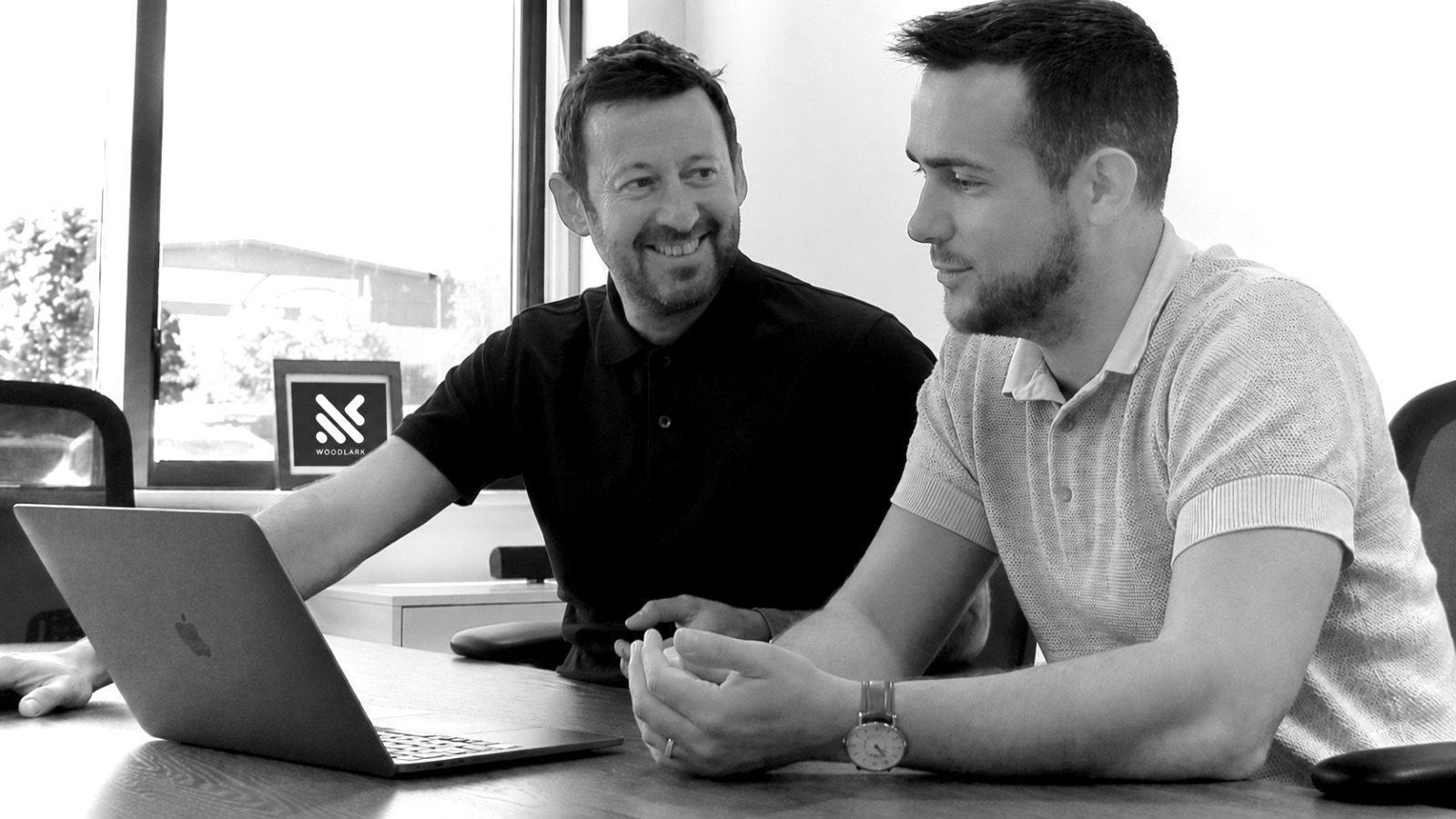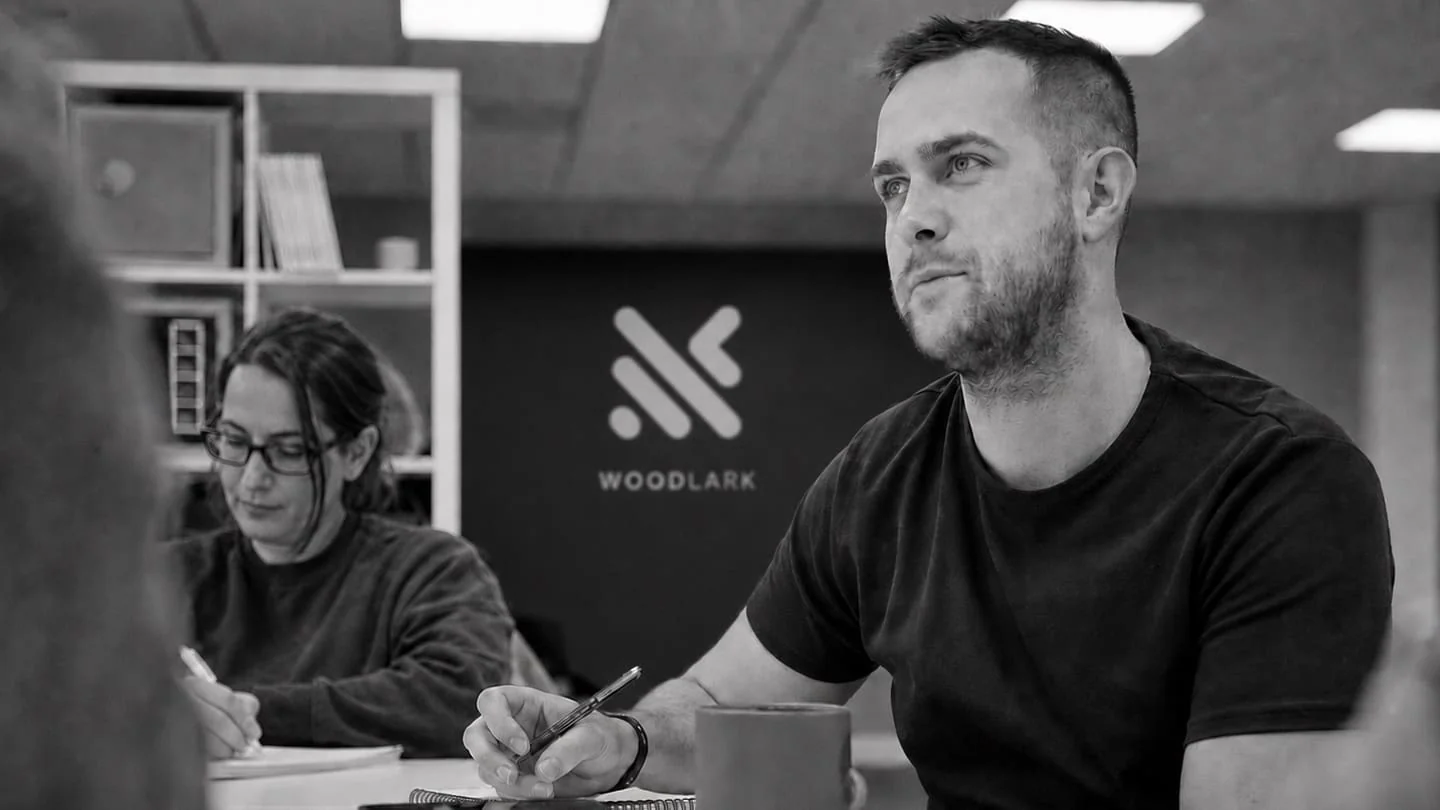

Trent Peek in a working session, listening while notes are taken across the table.

Who we are

Consultants advise. Agencies build.Woodlark does both.

Woodlark is a UK AI consultancy. We work out what should change, build the governed system and stay with the people who live with it until it runs. Published engagements span logistics, creative agencies, marketing, financial services, merchandise and service businesses; we work in partnership with Walker Logistics; and the governance we sell was proven first on a fleet of thirty-plus AI agents running a real company. The people leading it ran businesses before they built AI for them.

What Woodlark is

Where culture meets tech.

Woodlark exists because two kinds of experience rarely sit in the same room. Running a business: board meetings, the P&L, investors who want answers, operations that have to work on a Tuesday, people to hire and sometimes to let go, marketing that has to bring the work in, growth that has to be paid for. And building the systems: years spent making and breaking software, and now a company that runs day to day on more than thirty governed AI agent roles, the same kind of governed system Woodlark builds for clients.

Both kinds are in the room on every engagement, and behind them sits the wider operation: the Blueprint, Build and Embed method, the Woodlark Academy, a partnership with Walker Logistics, clients across the UK, and six published engagements spanning logistics, creative agencies, marketing, financial services, merchandise and service businesses.

That combination is rarer than it should be. The people who understand the business usually don’t build the systems, and the people who build the systems have rarely sat in the board meeting. Woodlark is where those two things meet.

Leadership

The whole problem, in the room.

Most AI questions have two answers: the one that works technically and the one that works in your business. Woodlark is set up so those two answers are argued out in the same room, led by the people below, until they agree. It usually takes longer than anyone would like.

Trent Peek, co-founder of Woodlark.

Co-founder · systems

Trent Peek

If Trent recommends a system, it's because he's already built one like it.

Trent gets under the bonnet. Systems, data, permissions. He builds the thing himself, from the first blueprint through to something a team can safely be handed, and he'd rather show you a working version than talk you through a diagram.

He spent his career in print and logistics, rising from business development to Managing Director and then Group Director at CCM Group, before co-founding WAF, which grew from nothing to £8m turnover in two years. Today he builds AI operating systems. He built his own consumer app from scratch; it now runs across 20 markets and 13 languages, with more than thirty governed agent roles doing the company's day-to-day work. Which means he's already living with the failure modes of anything he'd suggest for you.

The first question he asks of any system, including his own: what happens when it fails?

CCM Group
Managing Director, then Group Director
WAF
Co-founder. Nothing to £8m turnover in two years
Consumer app
Built from scratch. 20 markets, 13 languages
Agents in use
30+ governed roles running the company day-to-day

Richard Ardis, co-founder of Woodlark.

Co-founder · people & change

Richard Ardis

Getting it built is usually the easy part.

Richard's interest is what happens after the build works: whether people trust it, whether the proposition still makes sense, and whether anyone is still opening the dashboard in month three. He turns a complicated AI choice into something a leadership team can decide. He builds software too, which is why he doesn't take “it can't be done” at face value.

He spent two decades in advertising, branding and broadcast media, culminating as Managing Director at Global, the UK media group. Two decades of that left him with one belief: a build isn't finished when it works. It's finished when the people who have to live with it have changed how they work.

He'll be the one asking whether your ops manager will actually use it — and what the plan is if she won't.

Global
Managing Director at the UK media group
Two decades
Advertising, branding and broadcast media
Hands on
Builds software as well as the businesses that use it
The question
Is anyone still opening it in month three?

Sector experience

We’ve been on your side of the table.

Woodlark’s experience runs across media and broadcast, advertising and branding, print, logistics and third-party fulfilment, creative agencies, marketing, financial services, branded merchandise, consumer software across 20 markets and 13 languages, and music teaching. The founders built a company together before this one: WAF went from nothing to £8m turnover in two years, through five institutional funding rounds, and was named in the FEBE Growth 100. We know what it feels like when a clever idea meets Monday morning.

What to expect

The questions we’ll ask on the first call.

They come early, because the answers change everything that follows.

  1. “Who does this job now, and what do they think is going to happen to them?”

    The system has to work for the person who currently carries the work, or it won’t be used.

  2. “What breaks if it’s wrong on a Friday afternoon, and who finds out first?”

    Every system we build has a human approval step wherever money or a customer is involved. This is where we decide where those steps go.

  3. “If this works, what will you personally stop doing?”

    If the answer is nothing, it hasn’t worked.

You’ll get our view, what we still don’t know, and where we’d start. If AI is not the answer, we’ll say that too.

Founder-led, throughout. The people you meet on the first call are the people who stay close to the work, from the Blueprint to the day your team runs the system without us.

How Woodlark works

A system has to work twice: once in the technology, and again in the organisation.

Woodlark is built around both tests: a systems practice that makes it dependable, and a change practice that makes sure people actually use it. The founders lead both and stay in the work, which is how a promising build ends up as the way the business runs.

Book a conversation ↗